Jeep WranglervsMaruti Suzuki Swift
These two aren't really competitors — the Swift is a budget-friendly, fuel-sipping city hatchback at ₹5.79 lakh, while the Wrangler is a rugged, ₹66.2 lakh off-road-focused 4x4 lifestyle SUV. Pick the Swift for economical daily commuting and easy ownership costs; pick the Wrangler if you need serious off-road capability, power, and premium features and price is no concern.
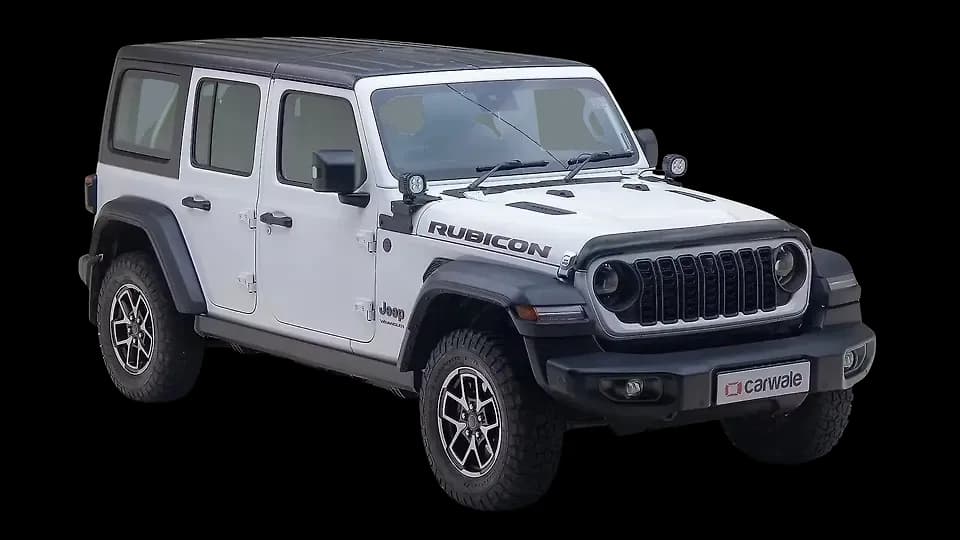
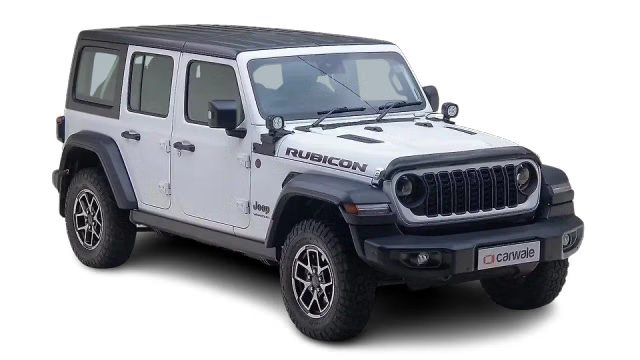
Jeep Wrangler
· ₹66.2 - ₹70.8 Lakh
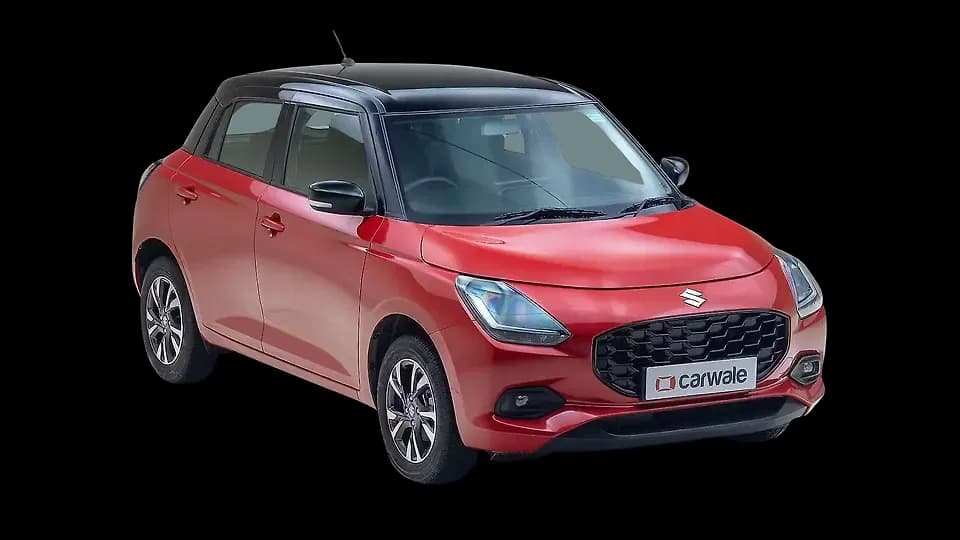
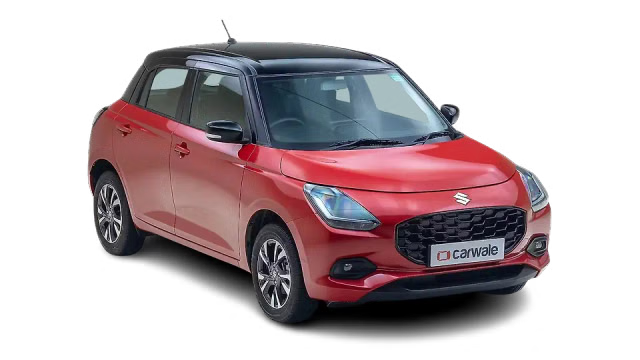
Maruti Suzuki Swift
· ₹5.79 - ₹8.84 Lakh
Recommendation
It's a tie
Which rider describes you?
Specs are only the starting point. Your daily use changes the answer, so the recommendation below adapts to the persona you choose.
Daily Commuter → Maruti Suzuki Swift
The Swift's small footprint, high fuel efficiency, and low running costs make it far better suited to everyday city commuting than the large, thirsty, expensive Wrangler.
Every vehicle has a different personality.
Instead of comparing specs one by one, our AI weighs how each vehicle performs across the factors that matter most.
What the shape reveals
The radar shows two completely different missions: the Swift leans into efficiency and value while the Wrangler dominates in raw performance, off-road capability, luxury, and tech — the trade-off being ownership cost and everyday practicality in the city.
Serious Power Advantage
The Wrangler's 268 bhp turbocharged 2.0L engine dwarfs the Swift's naturally aspirated 80 bhp unit.
AI Insight
Every score reflects real spec differences, not a single "best" vehicle — pick based on which shape matches how you'll actually use it.
Strengths that matter every day.
A breakdown of what each vehicle brings to the table, so you know exactly what you're trading off.
Jeep Wrangler
Serious Power Advantage
The Wrangler's 268 bhp turbocharged 2.0L engine dwarfs the Swift's naturally aspirated 80 bhp unit.
Built for Off-Roading
With a 36° approach angle, 223 mm ground clearance, and center plus both-axle differential locks, the Wrangler is engineered for serious terrain the Swift can't touch.
Premium Cabin Tech
A 12.3-inch touchscreen with wireless Android Auto/Apple CarPlay and 8 speakers puts the Wrangler's infotainment far ahead of the Swift, which has none.
Advanced Driver Assistance
Adaptive cruise control with Stop and Go, rear cross-traffic assist, and high-beam assist give the Wrangler active safety tech absent on the Swift.
Luxurious Comfort Features
Dual-zone automatic climate control, leather upholstery, and 10-way power-adjustable seats deliver a comfort level the Swift's manual AC and fabric seats can't match.
Maruti Suzuki Swift
Fuel Economy Champion
ARAI-rated 24.8 kmpl versus the Wrangler's 11.4 kmpl means the Swift costs far less to run day to day.
Featherweight Efficiency
At just 920 kg kerb weight, the Swift is nimble and easy to maneuver compared to the Wrangler's hefty 2042 kg.
City-Friendly Turning Circle
A 4.8 m turning radius and compact 3860 mm length make the Swift far easier to park and navigate tight streets.
Massive Price Advantage
At ₹5.78 lakh ex-showroom, the Swift costs a fraction of the Wrangler's ₹66.2 lakh price tag.
Practical Tailgate Access
The Swift offers an electric tailgate release and 265 L bootspace with flat-folding rear seats for everyday cargo needs.
Which one describes you?
Select the persona closest to how you'll actually use this vehicle and the verdict below adapts to match.
Maruti Suzuki Swift · 93% confidence
The Swift's small footprint, high fuel efficiency, and low running costs make it far better suited to everyday city commuting than the large, thirsty, expensive Wrangler.
Maruti Suzuki Swift
Superior fuel efficiency
ARAI-rated 24.8 kmpl versus the Wrangler's 11.4 kmpl means dramatically lower fuel costs for daily driving.
Maruti Suzuki Swift
Compact and easy to park
At 3860mm length with a 4.8m turning radius, the Swift is far easier to manoeuvre and park in tight city spaces than the massive Wrangler.
Maruti Suzuki Swift
Much lower price point
Priced at 5.79 lakh versus 66.2 lakh, the Swift is realistic for a daily commuter budget while the Wrangler is not.
Jeep Wrangler
Wrangler offers more safety tech
Features like TPMS, hill descent control, and traction control add extra confidence, though they're overkill for typical commuting needs.
Persona fit breakdown
Performance
Comfort
Technology
Ownership
Features that matter every day.
Instead of counting features, we compare which ones each vehicle actually includes.
Engine Performance
Battery Charging & Range
Transmission & Drivetrain
Suspension
Capacity & Dimensions
Tyre & Wheels
Warranty
Off Road essentials
ADAS & Active Safety
Passive Safety (Airbags, NCAP Ratings, etc.)
Brakes
AC & Climate Control
Doors, Mirrors & Wipers
Sunroof & Windows
Driver Assistance (Park Assist, Cruise Control, etc.)
Storage
Seating & Ergonomics
Infotainment & Entertainment
Instrument Cluster
Steering
Lighting & Visibilty
Mobile App & Remote Controls
Design & Styling
Warning & Alerts