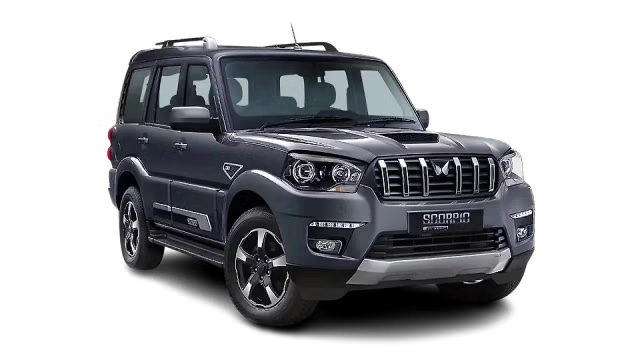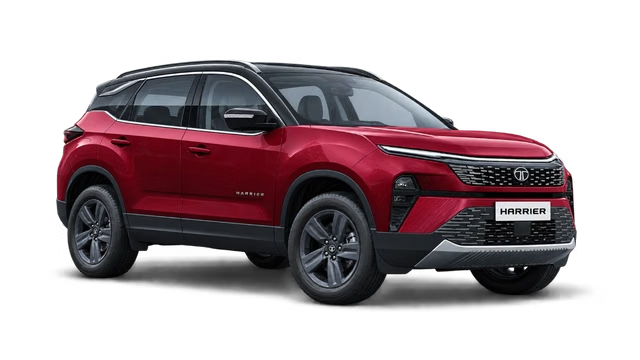
Mahindra TharvsTata Harrier
Our AI recommends
Tata Harrier
65% Match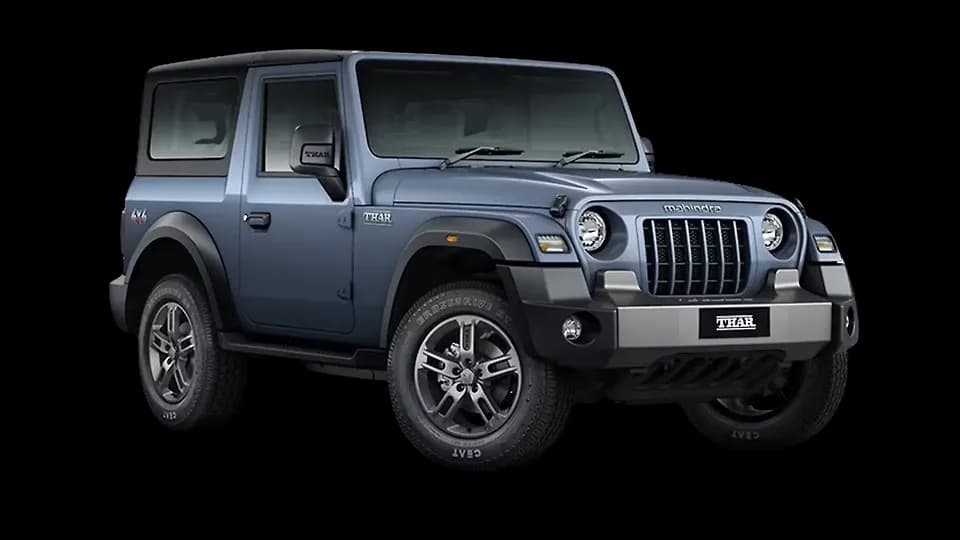
Mahindra Thar
AXT 2WD Diesel 1.5L Turbo Manual
₹10.32 - ₹18 Lakh
Ex-showroom price
Built for Real Off-Roading
The Thar offers an electronic differential lock, 41.2-degree approach angle, 36-degree departure angle, and 650mm wading depth, none of which the Harrier offers.
Rugged Ladder-Frame Construction
The Thar rides on a true ladder-frame chassis with driveline disconnect, roll cage, and tow hitch protection built for tough terrain.
More Usable Low-end Torque
Despite lower power, the Thar's 300 Nm arrives earlier at 1750-2500 rpm, aiding low-speed off-road pulling power.
AI Match
Tata Harrier
- 70%
Performance
- 78%
Comfort
- 72%
Luxury & Interior
- 55%
Technology
- 90%
Safety
- 65%
Ownership
- 82%
Practicality
- 60%
Value
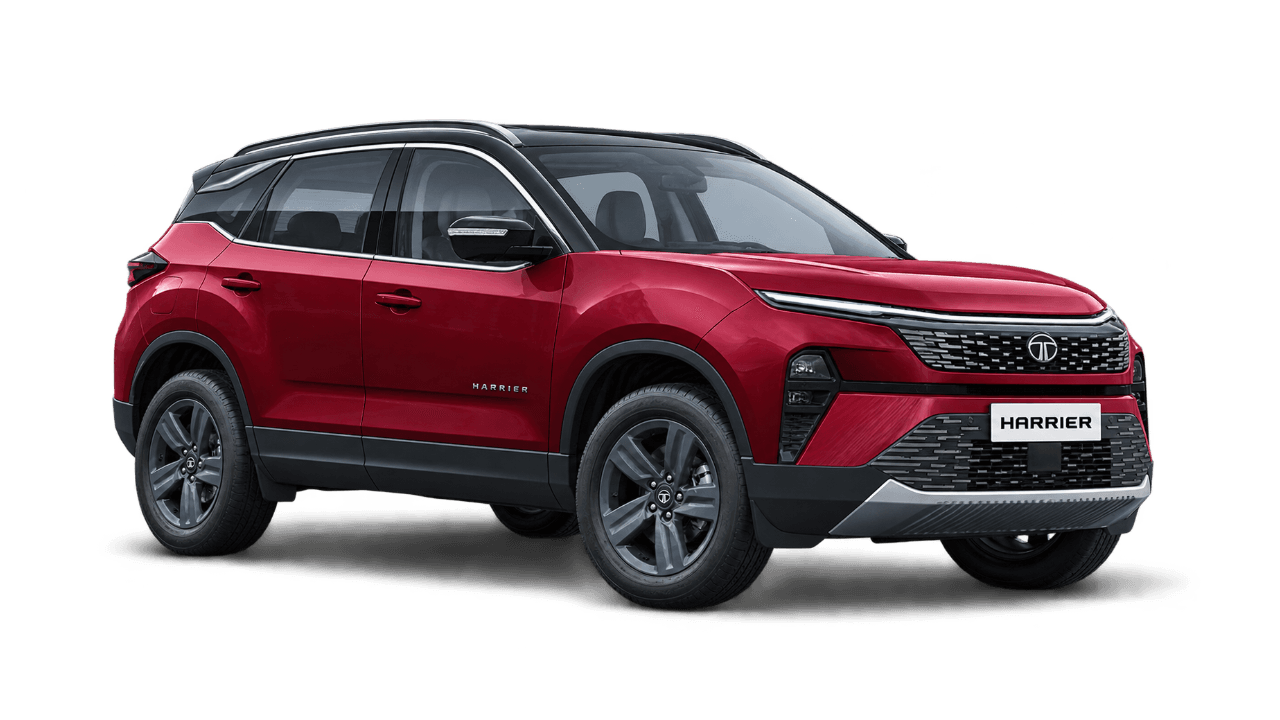
Tata Harrier
Smart Petrol 1.5L Turbo Manual
₹13 - ₹26.11 Lakh
Ex-showroom price
Vastly Superior Crash Safety
The Harrier packs 6 airbags and a 5-Star Bharat NCAP rating versus the Thar's 2 airbags and 4-Star Global NCAP rating.
More Power, More Torque
The Harrier's 1.5L turbo-petrol makes 168 bhp and 280 Nm compared to the Thar's 117 bhp and 300 Nm diesel, giving it a notable power edge.
Bigger, More Practical Cabin
With 5 doors, 5 seats, and a proper 445-815L bootspace, the Harrier is built for everyday family use, unlike the Thar's 3-door, 4-seat layout.
Which one describes you?
Tell us how you drive. Your daily use changes the recommendation.
Personalised recommendation
Daily CommuterYour AI pick
Tata Harrier
The Harrier offers better everyday comfort, safety tech, and cabin refinement for city and commute driving, despite lacking a touchscreen in this variant.
See Full ComparisonWhy Harrier for you?
Superior safety net
6 airbags, ESP, 5-star Bharat NCAP rating and rear parking sensors give commuters more confidence in daily traffic compared to Thar's 2 airbags and 4-star rating.
More comfortable cabin
Front & rear power windows, automatic climate control with second-row vents, and a more spacious 5-door layout suit stop-go commuting better than Thar's 3-door, front-only power windows.
Easier low-speed manoeuvring
FWD layout with a smaller turning setup and lighter unladen character generally suits city commuting better than a ladder-frame RWD SUV built for off-road use.
Every vehicle has a different personality.
Find out how the Mahindra Thar and Tata Harrier stack up across key factors and see what makes each of them unique.
Tata Harrier pulls ahead overall
The Harrier leads broadly across comfort, safety, technology and practicality reflecting its family-SUV focus, while the Thar's radar bulges only on off-road capability oriented axes, revealing two very differently purposed vehicles despite both being labelled SUVs.
Vastly Superior Crash Safety
The Harrier packs 6 airbags and a 5-Star Bharat NCAP rating versus the Thar's 2 airbags and 4-Star Global NCAP rating.
More Power, More Torque
The Harrier's 1.5L turbo-petrol makes 168 bhp and 280 Nm compared to the Thar's 117 bhp and 300 Nm diesel, giving it a notable power edge.
Bigger, More Practical Cabin
With 5 doors, 5 seats, and a proper 445-815L bootspace, the Harrier is built for everyday family use, unlike the Thar's 3-door, 4-seat layout.
A Trade-off
The Thar offers an electronic differential lock, 41.2-degree approach angle, 36-degree departure angle, and 650mm wading depth, none of which the Harrier offers.
Strengths that matter every day.
A side-by-side look at what each one does best, so you can choose what fits your needs.
Mahindra Thar
Strengths for those who prioritise features, power and value.
Built for Real Off-Roading
The Thar offers an electronic differential lock, 41.2-degree approach angle, 36-degree departure angle, and 650mm wading depth, none of which the Harrier offers.
Rugged Ladder-Frame Construction
The Thar rides on a true ladder-frame chassis with driveline disconnect, roll cage, and tow hitch protection built for tough terrain.
More Usable Low-end Torque
Despite lower power, the Thar's 300 Nm arrives earlier at 1750-2500 rpm, aiding low-speed off-road pulling power.
Hill Descent Control Included
The Thar comes with Hill Descent Control, a feature missing entirely from the Harrier's spec sheet.
Significantly Lower Ex-Showroom Price
At Rs 10.32 lakh versus the Harrier's Rs 12.99 lakh, the Thar undercuts its rival by nearly Rs 2.7 lakh.
Tata Harrier
Strengths for those who prioritise safety, power and comfort.
Vastly Superior Crash Safety
The Harrier packs 6 airbags and a 5-Star Bharat NCAP rating versus the Thar's 2 airbags and 4-Star Global NCAP rating.
More Power, More Torque
The Harrier's 1.5L turbo-petrol makes 168 bhp and 280 Nm compared to the Thar's 117 bhp and 300 Nm diesel, giving it a notable power edge.
Bigger, More Practical Cabin
With 5 doors, 5 seats, and a proper 445-815L bootspace, the Harrier is built for everyday family use, unlike the Thar's 3-door, 4-seat layout.
Richer Comfort & Convenience Kit
The Harrier adds automatic climate control, front and rear power windows, and an electric tailgate release, all absent or downgraded on the Thar.
Modern Digital Instrument Cluster
The Harrier gets a fully digital instrument cluster with adjustable brightness, versus the Thar's analogue-digital hybrid unit.
Features that matter every day.
Instead of counting features, we compare which ones each vehicle actually includes.
Engine Performance
Battery Charging & Range
Transmission & Drivetrain
Suspension
Capacity & Dimensions
Tyre & Wheels
Warranty
Off Road essentials
ADAS & Active Safety
Passive Safety (Airbags, NCAP Ratings, etc.)
Brakes
AC & Climate Control
Doors, Mirrors & Wipers
Sunroof & Windows
Driver Assistance (Park Assist, Cruise Control, etc.)
Storage
Seating & Ergonomics
Infotainment & Entertainment
Instrument Cluster
Steering
Lighting & Visibilty
Mobile App & Remote Controls
Design & Styling
Warning & Alerts