Comprehensive vs Third-Party Car Insurance for First-Time Buyers
By AdityaSeptember 26, 2026
Key Takeaways
- While comparing comprehensive vs third party car insurance in India, a third-party car insurance policy protects against financial and legal liabilities for death or injury to people or damage to their vehicle or private property. This type of insurance is mandatory in India before driving on the roads. Driving without a valid third-party car insurance attracts a penalty of up to ₹2,000 for first-time offenders.
- A comprehensive car insurance policy provides wider coverage combining third-party coverage with Own Damage protection, thus saving you from huge expenses during an unforeseen event. For first-time car buyers, comprehensive car insurance is a more suitable choice.
- Third-party insurance premiums are costlier as IRDAI fixes the rates based on the car’s engine capacity. Comprehensive premiums are usually higher and vary by insurer depending on IDV, car model, age, registration city, claim history, and chosen add-ons.
- First-time car buyers opting for comprehensive coverage should choose add-ons based on their requirements: Zero Depreciation, Engine Protection, Consumable Protection, No Claim Bonus, and Return to Invoice.
Comprehensive vs Third Party Car Insurance: What’s the Difference?
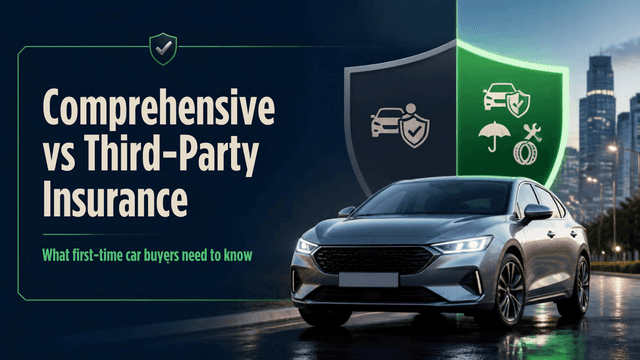
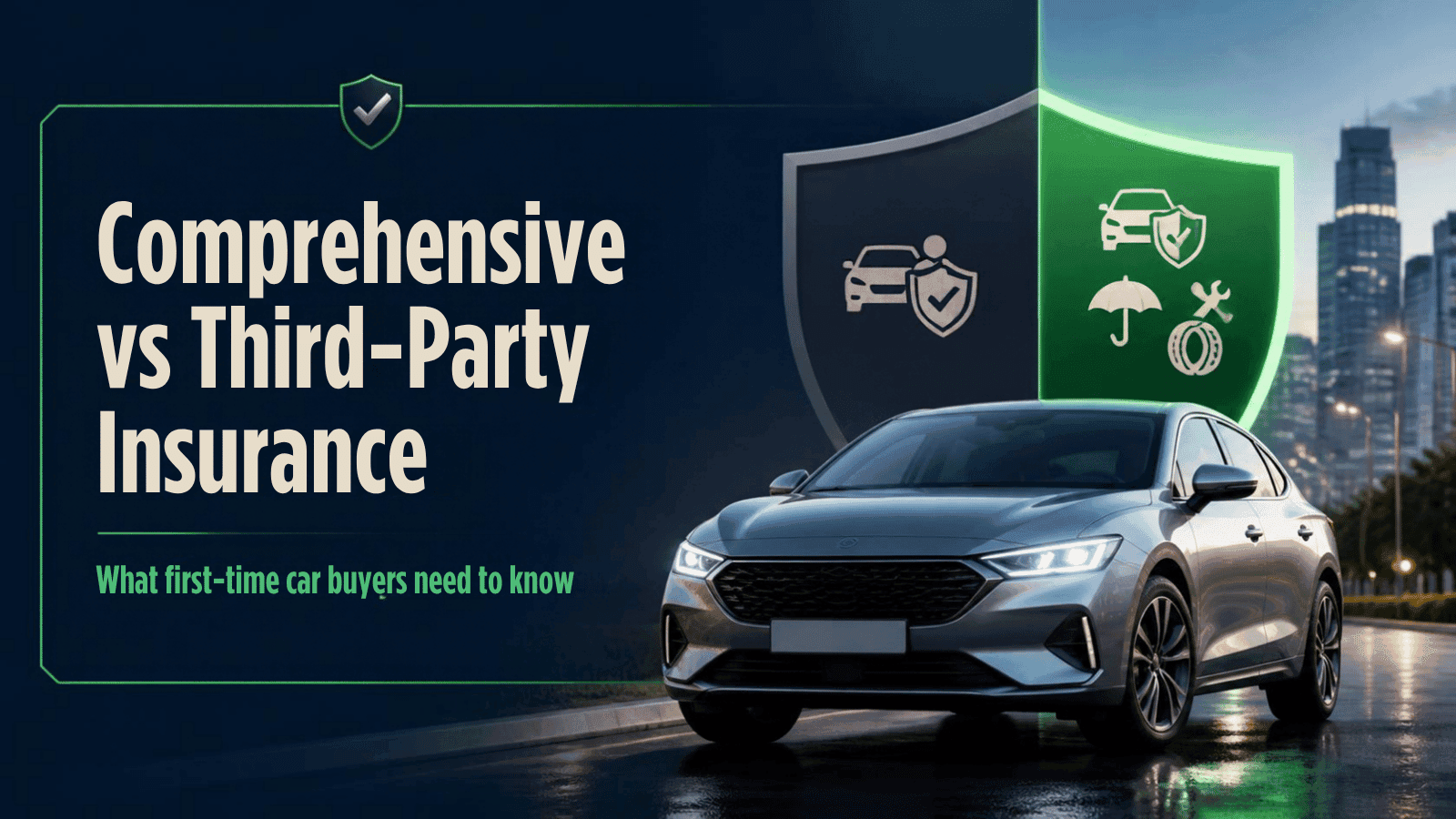
A third-party car insurance policy covers your financial and legal liabilities against death, injury, or damage caused to another person or their property. As per the IRDAI regulatory guidelines, it is mandatory for all car owners in India. A comprehensive car insurance policy covers damage to your own vehicle as well as third-party legal liabilities. While this policy is not mandated by law, it provides more holistic protection.
Understanding the difference between comprehensive vs third-party car insurance can help first-time buyers pick the right policy for their car.
| Feature | Third-Party Car Insurance | Comprehensive Car Insurance |
| Legal requirement | Mandatory | Not mandatory |
| Third-party injury/death liability | Covered | Covered |
| Third-party property damage | Covered, subject to policy limits | Covered, subject to policy limits |
| Damage to your own car | Not covered | Covered for insured risks |
| Theft of your car | Not covered | Generally covered under Own Damage section |
| Natural calamity damage | Not covered | Covered for insured events |
| Add-ons | Limited or not applicable depending on product | Wider range of add-ons available |
| Premium | Generally lower | Generally higher |
What Does Third Party Car Insurance Cover?
Third-party car insurance is the standard financial safety net legally mandated for every vehicle driving on Indian roads. The policy protects you against financial and legal liabilities if your car causes accidental damage to another person (third party), resulting in death or injury, or to their vehicle or property. It covers all expenses, including medical bills, disability compensation, and legal liabilities.
The policy does not cover any damages to your own vehicle. This means if the car is stolen or sustains damage in an accident or during a natural disaster, the third-party insurance will pay zero compensation for repairs. You will have to bear all expenses out of pocket.
How Are Third-Party Car Insurance Premiums Decided?
Third-party car insurance premiums depend solely on the vehicle’s engine cubic capacity (cc) or battery capacity (for electric cars), rather than its purchase price or market value.
IRDAI regulates third-party car insurance premium rates as follows:
- Engine capacity up to 1,000 cc: ₹2,094 annually
- Engine capacity between 1,001 cc and 1,500 cc: ₹3,146 annually
- Engine capacity above 1,500 cc: ₹7,897 annually
Under the Motor Vehicles Act, 1988, driving without valid third-party car insurance in India can get you fined up to ₹2,000 for a first-time offence. Repeat offenders may be charged up to ₹4,000 and may even get up to 3 months in prison.
What Does Comprehensive Car Insurance Cover?
A comprehensive car insurance policy combines mandatory third-party liability coverage with Own Damage (OD) protection. This means it pays for damage caused to a third party, as well as to your own vehicle in case of an unforeseen event such as an accident, theft, vandalism, or natural calamities.
The policy’s Own Damage portion covers repair or replacement costs resulting from the following:
- Accidental collisions
- Floods, earthquakes, landslides, and cyclones
- Accidental fires, vandalism, riots, and malicious damage
- Total financial loss in case your vehicle is stolen or untraceable
The amount you will receive for an Own Damage claim is determined based on the vehicle’s Insured Declared Value (IDV). IDV simply represents the car’s current market value after depreciation deductions.
Insurers offer a bundled car insurance policy for new vehicles, combining a mandatory 3-year third-party liability cover with a 1-year renewable Own Damage protection. Unlike a third-party policy whose insurance premiums are fixed by IRDAI based on the car’s engine capacity, Own Damage insurance premiums are set by the insurer after evaluating the car’s IDV, model, age, city of registration, claim history, and selected add-ons.
Comprehensive vs Third Party Car Insurance: Which One to Choose?
Deciding between comprehensive vs third-party car insurance policies comes down to whether you want basic legal and third-party liability coverage or want to upgrade to a plan that also protects your own vehicle against unforeseen damage.
When to Choose Third-Party Car Insurance
- If you strictly want to fulfil the legal requirement under the Motor Vehicles Act, 1988, without paying anything extra upfront.
- If your new car is meant for short travels or is parked safely off-road most of the time.
- If you generally drive in low-traffic zones or rural areas where the chances of an accident or natural calamity are low.
- If you have sufficient emergency cash to pay for sudden damage repairs or replacements out of pocket.
When to Select Comprehensive Car Insurance
- If your new car has a high market value because repair and replacement costs for modern, feature-packed sedans, hatchbacks and SUVs demand a substantial amount.
- If you have taken a loan to purchase a car. Banks usually mandate comprehensive coverage to protect their asset collateral until you pay off the entire loan amount.
- If you reside in congested, high-traffic urban areas, zones prone to earthquakes, landslides, floods, or a neighbourhood with high theft risks.
Popular Add-Ons for Comprehensive Car Insurance
As a first-time buyer, you should select suitable add-ons (engine protection, zero depreciation, No Claim Bonus, RTI) depending on your car’s age, usage and risks instead of paying for every available option.
| Add-On | What It Covers | Best For |
| Zero Depreciation | Reduces depreciation deductions on eligible parts during an Own Damage claim, subject to policy terms. | New cars and buyers wanting higher claim payouts |
| Engine Protection | Covers specified engine-related losses not covered under the standard Own Damage policy, subject to terms. | Cars used in areas prone to flooding or waterlogging |
| Return to Invoice | May provide additional compensation in specified theft or total-loss cases, subject to policy conditions. | New or high-value cars |
| No Claim Bonus Protection | Helps preserve NCB after an eligible claim, subject to policy conditions. | Buyers who want to protect their accumulated NCB |
Choosing between comprehensive vs third-party car insurance comes down to the level of protection you need. Third-party coverage takes care of any legal requirements, while comprehensive coverage offers broader financial protection for your own vehicle.
FAQs
Can I upgrade my third-party policy to a comprehensive policy later?
You can upgrade your third-party car insurance to a comprehensive policy at the time of renewal, or buy a standalone Own Damage cover from the insurer. Your insurance premiums will be revised based on policy terms and conditions.
How does No Claim Bonus work in comprehensive car insurance?
A No Claim Bonus is a discount you earn at the time of your comprehensive car insurance policy renewal for not claiming any damages. The NCB applies to the Own Damage premium for every claim-free policy year. The discount typically starts at 20% after the first year and goes up to 50% after 5 consecutive claim-free years.
Does third-party car insurance cover damage from floods or fallen trees?
No, third-party car insurance only covers legal and financial liabilities caused to other people and their property. If you want coverage for your own vehicle against damage caused by natural calamities, you would require a comprehensive car insurance policy.
Is comprehensive car insurance mandatory for new cars in India?
No, under the Motor Vehicles Act, 1988, only a third-party car insurance policy is mandatory in India. But IRDAI mandates a 3-year third-party cover for new cars, which is generally bundled with a 1-year Own Damage cover. If you take a car loan for the purchase, banks require comprehensive coverage to protect their asset collateral.
Does third-party insurance premium depend on the vehicle’s IDV?
No, the insurance premium for third-party car insurance is decided based on the vehicle’s engine capacity, not on its IDV. IRDAI sets this rate, which remains fixed. Your vehicle’s IDV, along with its age and model, location of registration, claim history, and add-ons, matter when deciding on comprehensive car insurance premiums.