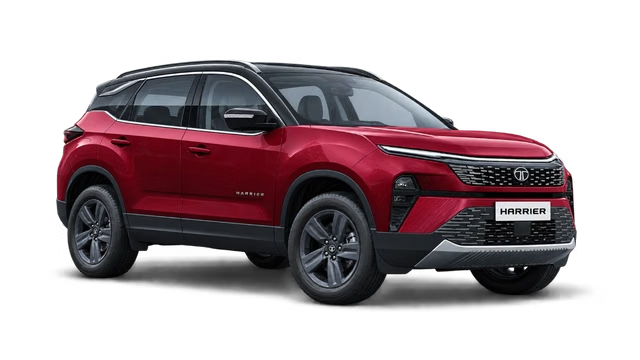
Hyundai Grand i10 NiosvsTata Harrier
Our AI recommends
Tata Harrier
82% Match
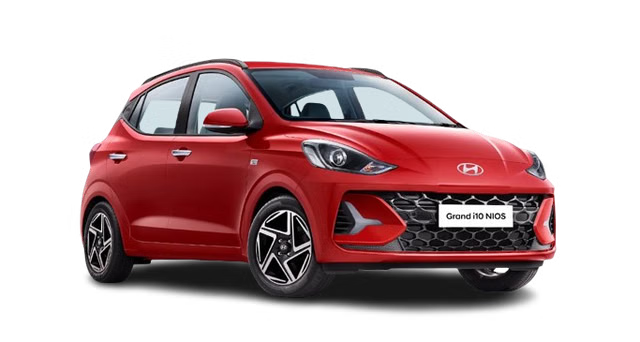
Hyundai Grand i10 Nios
Era Petrol Manual
₹5.6 - ₹8.04 Lakh
Ex-showroom price
Half the Price
At ₹5.6 lakh ex-showroom versus ₹13 lakh for the Harrier, the Nios costs less than half as much, making it far more accessible.
Easier to Park & Manoeuvre
At just 3815mm long with a 2450mm wheelbase, the Nios is dramatically smaller and easier to navigate through tight city streets and parking spots than the 4605mm Harrier.
Lighter Footprint on Tyres & Running Costs
Smaller 165/70 R14 steel-rim tyres and a compact 1.2L naturally aspirated engine typically mean cheaper tyre replacements and running costs compared to the Harrier's larger 235/65 R17 setup.
AI Match
Tata Harrier
- 78%
Performance
- 70%
Comfort
- 60%
Luxury & Interior
- 35%
Technology
- 85%
Safety
- 55%
Ownership
- 80%
Practicality
- 45%
Value
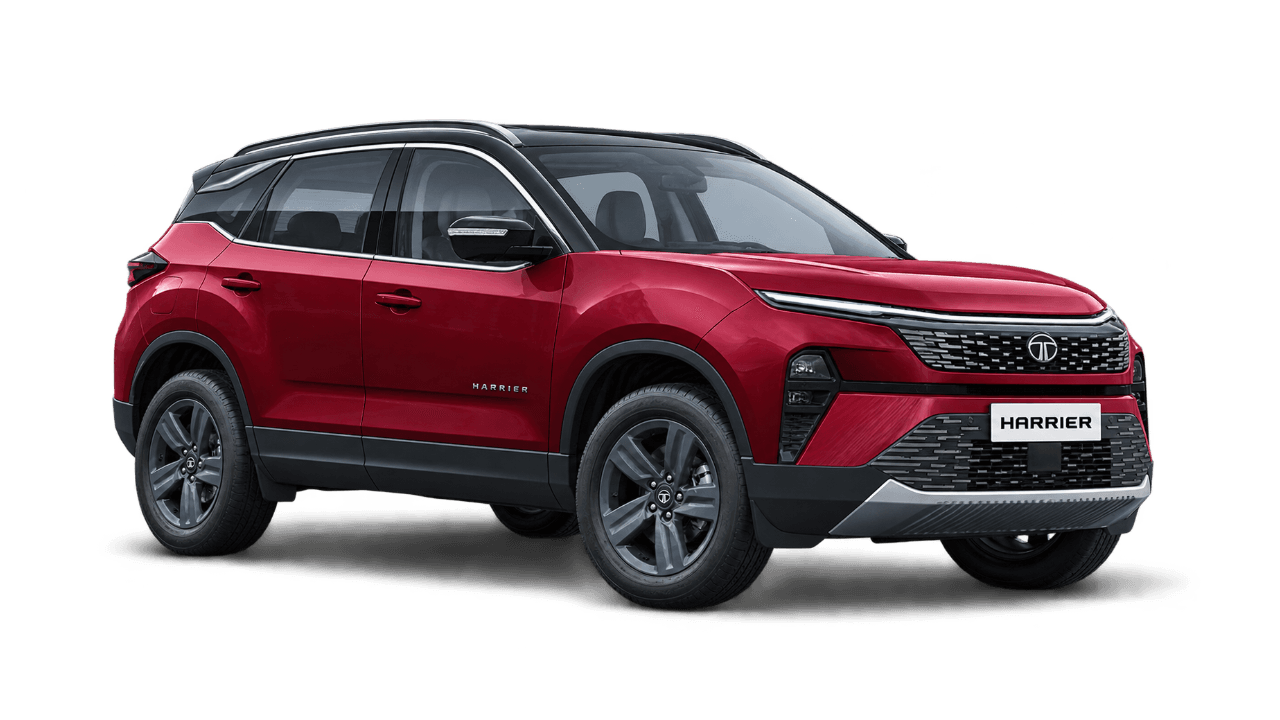
Tata Harrier
Smart Petrol 1.5L Turbo Manual
₹13 - ₹26.11 Lakh
Ex-showroom price
Far More Powerful Turbo Engine
The Harrier's 1.5L turbo-petrol makes 168bhp and 280Nm versus the Nios' naturally aspirated 82bhp and 114Nm, giving it dramatically stronger performance.
5-Star Safety Rating
The Harrier carries a 5-Star Bharat NCAP rating compared to the Nios' 2-Star Global NCAP rating, a major safety gap.
Electronic Stability Control & Traction Control
The Harrier adds ESP, traction control, hill hold control and brake assist, none of which are available on the Nios.
Which one describes you?
Tell us how you drive. Your daily use changes the recommendation.
Personalised recommendation
Daily CommuterYour AI pick
Hyundai Grand i10 Nios
For a budget-conscious daily commuter, the Grand i10 Nios offers a compact, easy-to-park footprint, lower running costs and a much lower price, making it the practical choice for city driving.
See Full ComparisonWhy Grand i10 Nios for you?
Compact & Nimble
At 3815mm length and a smaller turning footprint, the Nios is easier to park and maneuver in tight city traffic and parking lots than the much larger Harrier.
Much Lower Price
Priced at ₹5.6 lakh versus ₹13 lakh for the Harrier, the Nios is far more accessible and economical for everyday commuting duty.
Reported Efficient Mileage
User-reported mileage of 20 kmpl on the small 1.2L engine keeps daily fuel costs low, which matters most for a commuter driving frequently in traffic.
Every vehicle has a different personality.
Find out how the Hyundai Grand i10 Nios and Tata Harrier stack up across key factors and see what makes each of them unique.
Tata Harrier pulls ahead overall
The gap is starkest in Performance, Safety and Practicality where the Harrier's larger engine, 5-star crash rating and cavernous boot dominate, while the Nios claws back ground only on Value thanks to its far lower price tag.
Far More Powerful Turbo Engine
The Harrier's 1.5L turbo-petrol makes 168bhp and 280Nm versus the Nios' naturally aspirated 82bhp and 114Nm, giving it dramatically stronger performance.
5-Star Safety Rating
The Harrier carries a 5-Star Bharat NCAP rating compared to the Nios' 2-Star Global NCAP rating, a major safety gap.
Electronic Stability Control & Traction Control
The Harrier adds ESP, traction control, hill hold control and brake assist, none of which are available on the Nios.
A Trade-off
At ₹5.6 lakh ex-showroom versus ₹13 lakh for the Harrier, the Nios costs less than half as much, making it far more accessible.
Strengths that matter every day.
A side-by-side look at what each one does best, so you can choose what fits your needs.
Hyundai Grand i10 Nios
Strengths for those who prioritise value, power and features.
Half the Price
At ₹5.6 lakh ex-showroom versus ₹13 lakh for the Harrier, the Nios costs less than half as much, making it far more accessible.
Easier to Park & Manoeuvre
At just 3815mm long with a 2450mm wheelbase, the Nios is dramatically smaller and easier to navigate through tight city streets and parking spots than the 4605mm Harrier.
Lighter Footprint on Tyres & Running Costs
Smaller 165/70 R14 steel-rim tyres and a compact 1.2L naturally aspirated engine typically mean cheaper tyre replacements and running costs compared to the Harrier's larger 235/65 R17 setup.
LED Tail Lights Standard
The Nios features LED taillights, a touch of modern styling even at its budget price point.
Keyless Central Locking
The Nios offers keyless central locking, a convenience feature that the Harrier's central locking spec lacks in this data.
Tata Harrier
Strengths for those who prioritise power, safety and comfort.
Far More Powerful Turbo Engine
The Harrier's 1.5L turbo-petrol makes 168bhp and 280Nm versus the Nios' naturally aspirated 82bhp and 114Nm, giving it dramatically stronger performance.
5-Star Safety Rating
The Harrier carries a 5-Star Bharat NCAP rating compared to the Nios' 2-Star Global NCAP rating, a major safety gap.
Electronic Stability Control & Traction Control
The Harrier adds ESP, traction control, hill hold control and brake assist, none of which are available on the Nios.
Massive Boot Space
With 445L expandable to 815L with seats folded, the Harrier's boot dwarfs the Nios' 260L cargo capacity.
Rear AC Vents & Automatic Climate Control
The Harrier offers automatic climate control with second-row AC vents, versus the Nios' basic manual single-zone front AC with no rear cooling.
Features that matter every day.
Instead of counting features, we compare which ones each vehicle actually includes.
Engine Performance
Battery Charging & Range
Transmission & Drivetrain
Suspension
Capacity & Dimensions
Tyre & Wheels
Warranty
ADAS & Active Safety
Passive Safety (Airbags, NCAP Ratings, etc.)
Brakes
AC & Climate Control
Doors, Mirrors & Wipers
Sunroof & Windows
Driver Assistance (Park Assist, Cruise Control, etc.)
Storage
Seating & Ergonomics
Infotainment & Entertainment
Instrument Cluster
Steering
Lighting & Visibilty
Mobile App & Remote Controls
Design & Styling
Warning & Alerts