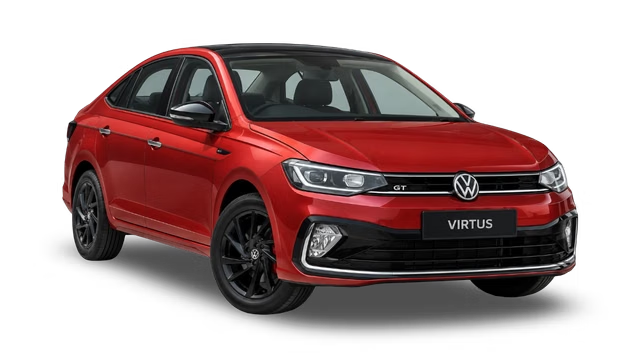
Hyundai VernavsVolkswagen Virtus
Our AI recommends
Volkswagen Virtus
72% Match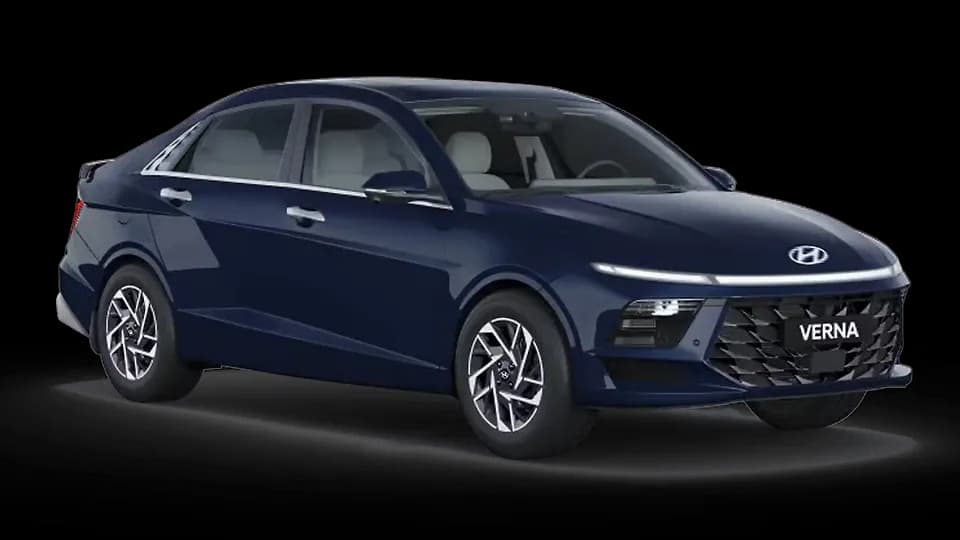
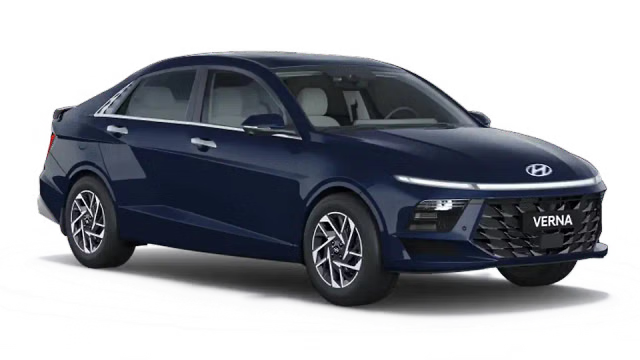
Hyundai Verna
HX 2 Petrol 1.5L Manual
₹10.99 - ₹18.41 Lakh
Ex-showroom price
Roomier Footprint
The Verna has a longer wheelbase (2670mm vs 2651mm) and is wider (1765mm vs 1752mm), which can translate to a bit more interior space.
Hill Hold Control
The Verna includes hill hold control for easier hill starts, a feature the Virtus does not offer.
Automatic Headlamps & Follow-Me-Home
The Verna adds automatic headlamps and follow-me-home headlamp functionality, conveniences absent on the Virtus.
AI Match
Volkswagen Virtus
- 78%
Performance
- 68%
Comfort
- 65%
Luxury & Interior
- 74%
Technology
- 85%
Safety
- 70%
Ownership
- 72%
Practicality
- 74%
Value
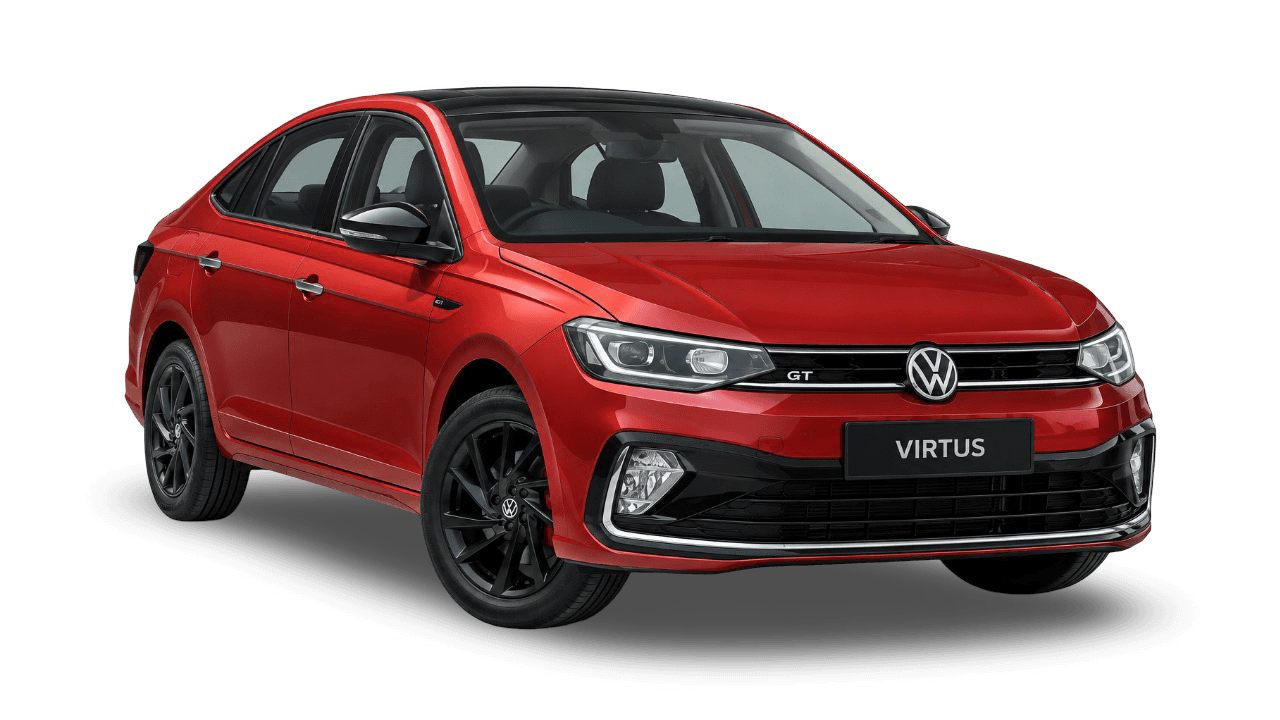
Volkswagen Virtus
Comfortline Petrol 1.0L Turbo Manual
₹10.71 - ₹19.2 Lakh
Ex-showroom price
Turbocharged Punch
The 1.0L TSI turbo-petrol makes 178 Nm of torque from just 1750 rpm versus the Verna's naturally-aspirated 143.8 Nm at 4500 rpm, giving stronger real-world pull.
5-Star Safety Pedigree
The Virtus carries a 5-Star Global NCAP rating while the Verna is listed as not tested, a meaningful reassurance for safety-conscious buyers.
LED Everywhere
Virtus gets LED headlights, LED DRLs and LED taillights as standard, while the Verna makes do with halogen projector headlights and no DRLs.
Which one describes you?
Tell us how you drive. Your daily use changes the recommendation.
Personalised recommendation
Daily CommuterYour AI pick
Volkswagen Virtus
For stop-go city driving, the Virtus's torquey turbo engine with idle start/stop and lower price make it the more efficient, relaxed daily companion.
See Full ComparisonWhy Virtus for you?
Torque Where It Matters
178 Nm arriving from just 1750 rpm makes low-speed city crawling and overtaking far less strained than the Verna's high-rpm torque peak.
Idle Start/Stop Saves Fuel
The Virtus cuts the engine at traffic lights, a fuel-saving feature completely missing on the Verna.
Lower Upfront Cost
At a lower ex-showroom price, the Virtus is easier on the wallet for a daily runabout.
Every vehicle has a different personality.
Find out how the Hyundai Verna and Volkswagen Virtus stack up across key factors and see what makes each of them unique.
Volkswagen Virtus pulls ahead overall
The Virtus pulls ahead in Performance, Safety and Technology thanks to its turbocharged engine, 5-star NCAP rating and richer infotainment, while the Verna's slightly larger dimensions and hill hold give it a marginal edge only in ownership convenience.
Turbocharged Punch
The 1.0L TSI turbo-petrol makes 178 Nm of torque from just 1750 rpm versus the Verna's naturally-aspirated 143.8 Nm at 4500 rpm, giving stronger real-world pull.
5-Star Safety Pedigree
The Virtus carries a 5-Star Global NCAP rating while the Verna is listed as not tested, a meaningful reassurance for safety-conscious buyers.
LED Everywhere
Virtus gets LED headlights, LED DRLs and LED taillights as standard, while the Verna makes do with halogen projector headlights and no DRLs.
A Trade-off
The Verna has a longer wheelbase (2670mm vs 2651mm) and is wider (1765mm vs 1752mm), which can translate to a bit more interior space.
Strengths that matter every day.
A side-by-side look at what each one does best, so you can choose what fits your needs.
Hyundai Verna
Strengths for those who prioritise comfort, features and performance.
Roomier Footprint
The Verna has a longer wheelbase (2670mm vs 2651mm) and is wider (1765mm vs 1752mm), which can translate to a bit more interior space.
Hill Hold Control
The Verna includes hill hold control for easier hill starts, a feature the Virtus does not offer.
Automatic Headlamps & Follow-Me-Home
The Verna adds automatic headlamps and follow-me-home headlamp functionality, conveniences absent on the Virtus.
Rear Seat Comfort Touches
The Verna offers a rear armrest with cup holder and 4 cup holders across front and second row, plus front seatback pockets, versus the Virtus's front-only cup holders and no rear armrest.
Digital Instrument Cluster
The Verna's instrument cluster is fully digital with a digital tachometer, compared to the Virtus's analogue-digital hybrid cluster with an analogue tachometer.
Volkswagen Virtus
Strengths for those who prioritise power, safety and performance.
Turbocharged Punch
The 1.0L TSI turbo-petrol makes 178 Nm of torque from just 1750 rpm versus the Verna's naturally-aspirated 143.8 Nm at 4500 rpm, giving stronger real-world pull.
5-Star Safety Pedigree
The Virtus carries a 5-Star Global NCAP rating while the Verna is listed as not tested, a meaningful reassurance for safety-conscious buyers.
LED Everywhere
Virtus gets LED headlights, LED DRLs and LED taillights as standard, while the Verna makes do with halogen projector headlights and no DRLs.
Smarter Infotainment
An 8-speaker system with wired Android Auto/Apple CarPlay and built-in GPS navigation beats the Verna's 4-speaker setup, which lacks Bluetooth, smart connectivity, and even AM/FM radio.
Lower Price, More Kit
At Rs 10,70,900 ex-showroom, the Virtus undercuts the Verna's Rs 10,99,200 while adding idle start/stop, electric tailgate release and a bigger 521L boot.
Features that matter every day.
Instead of counting features, we compare which ones each vehicle actually includes.
Engine Performance
Battery Charging & Range
Transmission & Drivetrain
Suspension
Capacity & Dimensions
Tyre & Wheels
Warranty
ADAS & Active Safety
Passive Safety (Airbags, NCAP Ratings, etc.)
Brakes
AC & Climate Control
Doors, Mirrors & Wipers
Sunroof & Windows
Driver Assistance (Park Assist, Cruise Control, etc.)
Storage
Seating & Ergonomics
Infotainment & Entertainment
Instrument Cluster
Steering
Lighting & Visibilty
Mobile App & Remote Controls
Design & Styling
Warning & Alerts